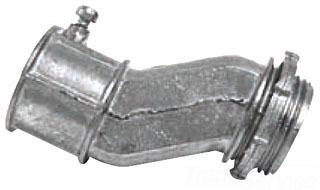
Usage: Connects EMT conduit to metal outlet boxes or enclosures
Compliance: UL Standard 514B, NEMA FB-1
Concrete Tight: When taped
Applications:
Connecting EMT Conduit to Metal Outlet Boxes: It is primarily used to connect EMT conduit to metal outlet boxes or enclosures, ensuring a secure and reliable connection
Commercial and Residential Wiring: Commonly used in both commercial and residential electrical installations to maintain the integrity of the conduit system
Concrete Tight Applications: When taped, it provides concrete-tight protection, making it suitable for installations where a secure and moisture-resistant connection is required
Indoor Electrical Systems: Specifically designed for indoor use, ensuring a reliable connection between EMT conduit and electrical boxes
Instructions:
Preparation:
Ensure the ends of the EMT conduit are clean and free from burrs.
Measure and cut the conduit to the desired length.
Assembly:
Insert the EMT conduit into the offset connector until it reaches the stop.
Tighten the set screw on the connector to secure the conduit.
Connection to Box:
Insert the threaded end of the connector into the knockout hole of the electrical box.
Secure the connector to the box using the provided locknut. Tighten the locknut with a wrench to ensure a firm connection.
Inspection:
Check the connection to ensure it is tight and secure.
Verify that the connector is properly aligned with the conduit and the box
Tools Required:
Pipe Cutter or Hacksaw: To cut the EMT conduit to the desired length.
Deburring Tool: To remove any burrs from the cut ends of the conduit.
Screwdriver: To tighten the set screws on the connector.
Wrench: To tighten the locknut when securing the connector to the electrical box.
Tape Measure: To measure the conduit lengths accurately.
Level: To ensure the conduit is installed straight and level
There are currently no resources for this product.